Maintenance After ECU Tuning: Moto, ATV & UTV
How to maintain a tuned motorcycle, ATV or UTV: oil intervals, spark plugs, CVT belt, chain, cooling, fault codes, dealer updates and a note on warranty.
Engine oil: shorten the interval if you ride hard
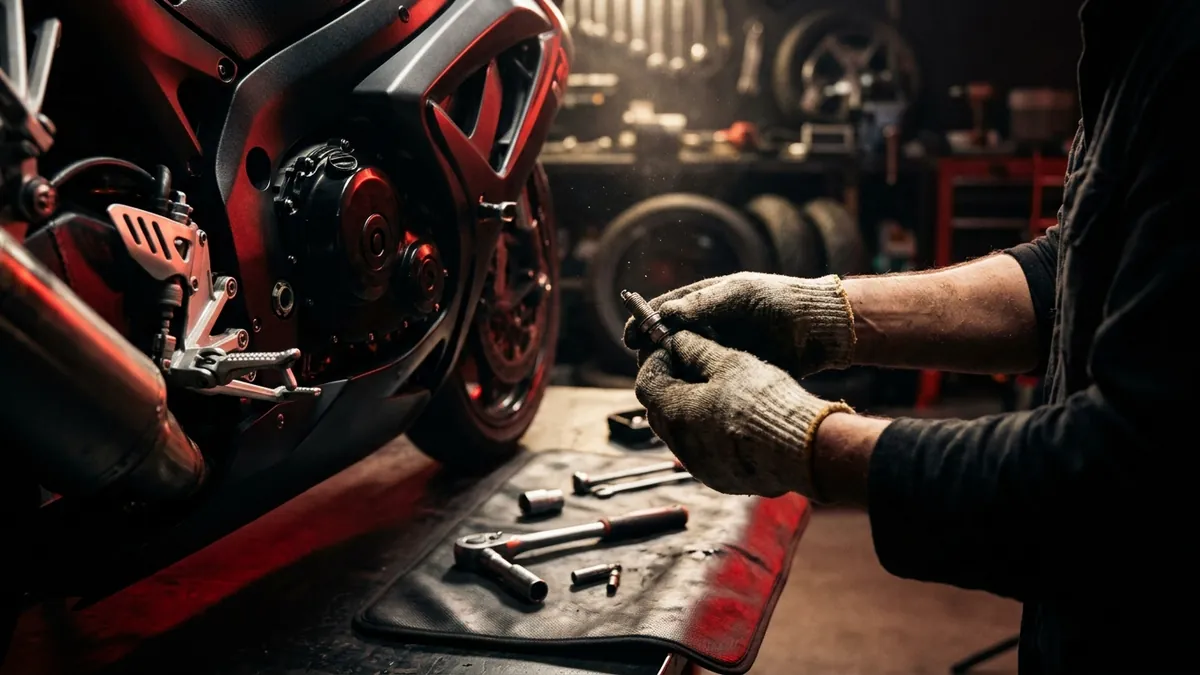
Guides A well-written calibration does not make an engine fragile. It does, however, use more of the margin the manufacturer left on the table, and riders who tune their machines usually ride them harder. Maintenance is how you keep that extra performance reliable. Most of it is the same work you already know; what changes is how often you do it and how closely you watch the results. Before any tune, the engine should be healthy. A tune does not fix low compression, an intake leak or a weak fuel pump, and it can make their symptoms worse. Our how it works page explains what we check from your read file and what we ask about the vehicle before we write a calibration. Oil takes the heat and shear that more power and more rpm create. If you race, ride dunes, work in deep mud, tow, hold high rpm for long periods or run a turbo engine, use the manufacturer's severe-service schedule as your baseline, and consider shortening it further. Practical habits: Use the viscosity and specification in the owner's manual. On motorcycles and ATVs with a wet clutch, that usually means a motorcycle oil rated for wet clutches (JASO MA or MA2), not a car oil. Check the level between changes. Hard use can increase consumption. Change the filter with every oil change. Look at the drained oil. Metal glitter, a milky color or a strong fuel smell are reasons to stop and investigate. Spark plugs Plugs are cheap insurance. Use the heat range and gap specified by the manufacturer, or the ones your calibrator recommends if the build calls for something different. Higher-output builds, especially turbocharged ones, sometimes run a colder plug or a tighter gap, but only change these when your calibrator tells you to. Inspect the plugs when you replace them: their color and condition say a lot about mixture and combustion. Air filter A tuned engine moves more air, and dust is the fastest way to wear it out. In dusty conditions, check the filter after every ride and clean or replace it more often than the schedule says. Make sure it seals completely in its housing. If you use an oiled foam or cotton filter, oil it correctly: too little lets dust through, too much can foul the intake and sensors. Fuel quality Your calibration was written for a specific fuel. Keep using the grade and octane rating it was built for, buy from busy stations, and avoid old fuel. If the machine sits for weeks, use a fuel stabilizer or drain the system, especially with ethanol blends. Our article on octane and E85 in powersports explains why the number on the pump matters and how it differs between countries.
CVT belt and clutch on ATVs and UTVs
On a CVT machine, the belt transmits every extra lb-ft of torque, and heat is its enemy. More power means more load and more heat, so the belt deserves attention: Break in a new belt gently, following the manufacturer's procedure. Use low range for slow, heavy work, climbing at low speed, loading onto a trailer and deep mud. High range at low speed is the classic way to cook a belt. Inspect the belt regularly for glazing, cracks, missing cogs or a reduced width, and carry a spare and the tools to fit it. Keep the clutch housing clean and dry, and check its seals and vents after water crossings. If the clutch has been recalibrated with new weights or springs, tell your calibrator; the engine and clutch have to agree on the rpm range. Chain and drivetrain on motorcycles More torque, and often more aggressive riding, means faster chain and sprocket wear. Clean and lube the chain at the intervals in the manual, more often in mud, sand or rain, and keep the slack within specification. Replace chain and sprockets together when they are worn. Watch the clutch too: if it slips under hard acceleration after a tune, it may be worn, the adjustment may be off, or the springs may need attention. Cooling system More power means more heat. Keep coolant fresh and at the right level, check hoses and caps, and make sure the fan comes on when it should. On ATVs and UTVs, mud packed into the radiator is a common cause of overheating, so clean it after every muddy ride. On personal watercraft, flush the cooling system after riding in salt or dirty water, as the manufacturer recommends. On air-cooled engines, keep the cylinder fins clean.
Fault codes and data logging
A check-engine light or a stored fault code on a tuned engine is information, not something to clear and forget. Read the code, write it down and tell us before clearing it, especially if it relates to fueling, knock, boost or temperature. A sensor that starts failing after a tune is usually a sensor that was already on its way out, but we want to know. If your diagnostic tool can log data, use it. A short log of rpm, throttle, air-fuel ratio, ignition timing, knock activity and temperatures, recorded in the conditions where you ride, is the fastest way to confirm that everything is working as intended, or to find out early when something changes. Keep the original file, and watch out for dealer updates When you upload a read file to your account, we keep a copy of the original. Keep your own copy as well, on a computer and in cloud storage. Dealer visits need a little planning. During service, the dealer may install a software update for the ECU, and an update can overwrite the flash, replacing your tuned calibration with a new factory one. Afterward, the software version may also be different, which means the modified file we made earlier may no longer match. If your vehicle has been to the dealer: Check whether the tune is still there: power delivery, throttle response or any features you added. If it has been overwritten, do not write the old modified file back blindly. Make a new read and upload it, and we will check the software version and adapt the calibration. An honest word about warranty ECU tuning can affect your warranty. Manufacturers and dealers can decline claims for parts they consider related to the modification, and some can see that the ECU has been reprogrammed even after the original file is restored. We keep your original file and can help you restore it, but we cannot promise that a modification will go unnoticed, and we will not tell you that your warranty is unaffected. Make that decision before tuning a vehicle that is still under warranty. Our FAQ covers this in more detail, and our article on motorcycle remap myths separates fact from rumor on reliability.
A simple routine after tuning
After every hard ride: check the air filter, clean the radiator, look for leaks. Every oil change: inspect the drained oil, check the plugs if they are accessible, inspect the belt or chain. After any dealer visit: confirm the tune is still installed. Whenever a warning light appears: read the code and tell us before clearing it. For platform-specific advice, see our pages on ATV ECU tuning and motorcycle ECU tuning . Want a calibration built around how you actually ride and maintain your machine? Create an account and upload your original read file. Questions about maintenance, updates or warranty? Contact us .